

Most people seek out a reiki treatment because they want to feel relaxed, yet a temporary sense of calm often fails to address the underlying physiological triggers of chronic stress. You’ve likely experienced the frustration of marketing that prioritizes spiritual “vibes” over verifiable results. It’s difficult to find your way through an unregulated market where it’s hard to distinguish a weekend hobbyist from a dedicated professional. You deserve a practice that respects your time, your intelligence, and your physiology.
This article will show you how to identify high-quality Reiki treatments that prioritize nervous system regulation and professional integrity over superficial comfort. You’ll discover how to look past the ethereal language to find a practitioner who understands the mechanics of internal coherence. We’ll provide a clear framework for selecting a partner in your health who values substance, ethics, and long-term stability. By focusing on grounded somatic principles, you can move beyond temporary relief and realize a state of genuine, lasting resilience.
Key Takeaways
- Learn to distinguish between casual energy sessions and a professional reiki treatment that meets high therapeutic standards.
- Discover how targeted energetic work supports nervous system regulation by transitioning the body from chronic stress to a rest-and-digest state.
- Identify the specific modality that fits your goals, whether you require the physiological focus of Therapeutic Reiki or the spiritual depth of Akashic work.
- Use our grounded buying guide to verify practitioner lineage and ethics, ensuring your investment leads to internal coherence rather than superficial relief.
- Understand how professional integrity and rigorous standards create a secure environment for deep, meaningful change.
What is a Professional Reiki Treatment?
A professional reiki treatment is a structured, intentional session designed to facilitate internal coherence through energetic balancing. Unlike casual energy work, which often lacks a formal framework or professional boundaries; therapeutic Reiki is guided by a trained practitioner who follows specific protocols. This isn’t about chasing a temporary spiritual high. Instead, the focus remains on achieving emotional stability and physiological calm. It’s a disciplined approach to well-being that prioritizes the client’s long-term stability over fleeting emotional experiences.
Professionals in Canada often find themselves caught in a cycle of high-performance demands and chronic stress. They need solutions that are as grounded as they are effective. A professional-grade session provides a sanctuary where you can centre your focus and the body can reorganize its internal resources. This grounded approach is essential because it bridges the gap between spiritual curiosity and practical reality. It offers a clear, predictable environment where the client can feel safe enough to let down their guard and begin the work of deep regulation.
The Origins and Evolution of Reiki
The practice began in Japan in the early 20th century with Mikao Usui, but it has evolved significantly over the last hundred years. While you can find a comprehensive overview of Reiki that details its historical lineage, the modern professional application has moved toward a sophisticated somatic tool. We’ve shifted away from purely mystical interpretations to an evidence-informed model of care. Practitioners today view Reiki as a way to engage with the body’s subtle systems to promote deep, sustained regulation. This evolution reflects a growing demand for transparency and professional standards within the energetic arts.
Reiki as a Complementary Discipline
It’s vital to recognize that Reiki is a complementary discipline. It doesn’t replace medical diagnosis or psychological counselling; it supports them. In the Canadian health landscape, integrative care is becoming the standard for those seeking holistic well-being. Reiki fills a functional gap that traditional talk therapy often leaves behind. While talk therapy addresses the cognitive aspects of stress, a professional reiki treatment works directly with the physiological state of the body.
This synergy creates a more robust foundation for long-term health. It allows the client to access a level of internal focus that is often difficult to reach through conversation alone. By addressing both the mind and the body’s energetic state, clients can realize a more complete sense of internal alignment. This dual approach ensures that insights gained during therapy are integrated into the body’s physical experience, fostering a sense of wholeness that is both felt and understood.
This holistic perspective is further enhanced when energetic work is paired with specialized physical rehabilitation. For instance, Optima Physical Therapy provides a model of how innovative AI-powered technology can be used to support the body’s structural health, ensuring that physiological recovery is as precise as the energetic balancing found in a professional Reiki session.
The Mechanics of Healing: Nervous System Regulation
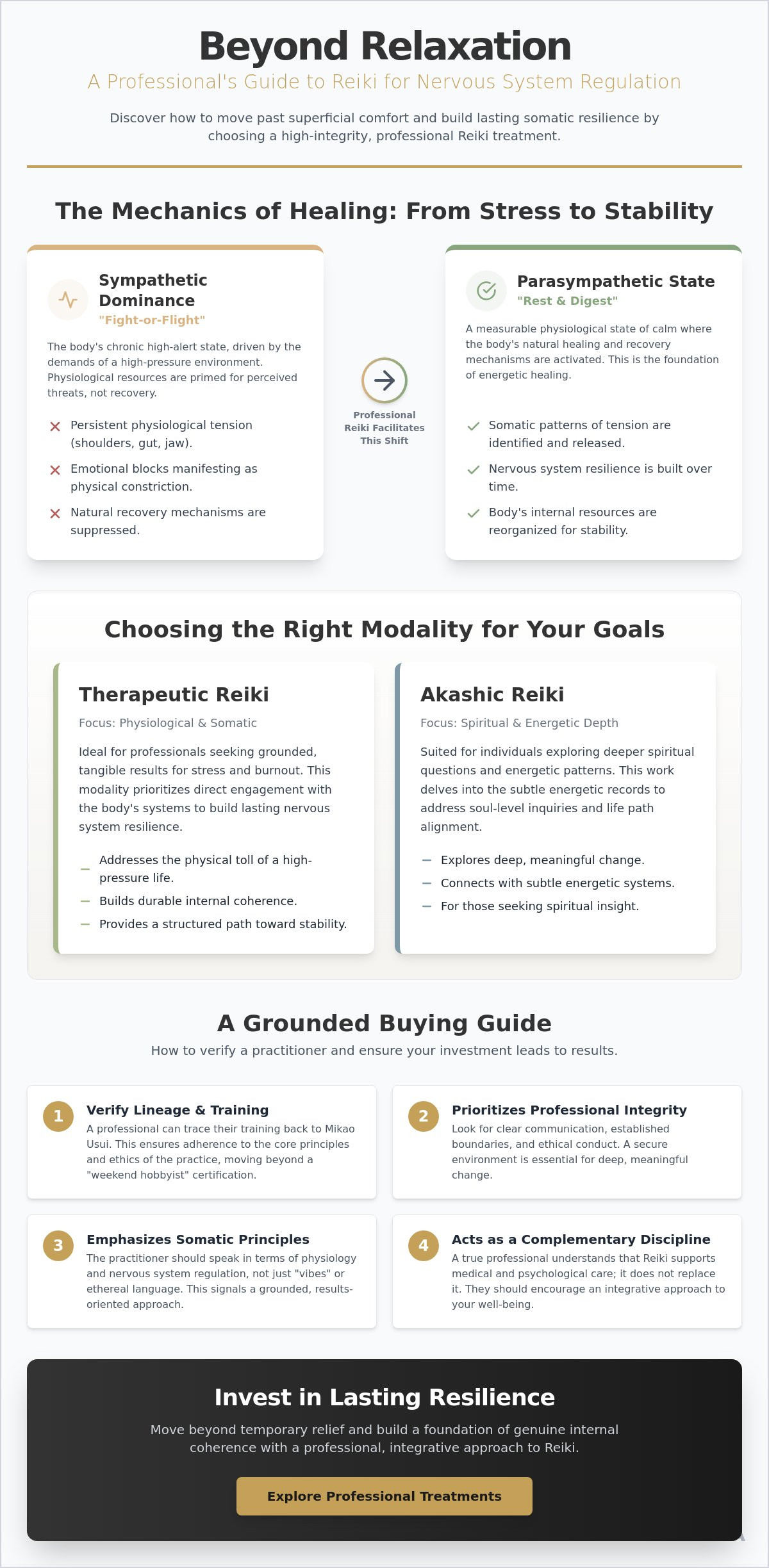
The efficacy of a professional reiki treatment lies in its ability to interface directly with the autonomic nervous system. Most clients arrive in a state of sympathetic dominance, often referred to as “fight-or-flight,” where the body is primed for perceived threats. Through intentional energetic work, the practitioner facilitates a transition into the parasympathetic “rest-and-digest” state. This shift is not merely a feeling of relaxation. It is a measurable physiological change. Nervous system regulation is the physiological foundation of energetic healing. When the body exits a state of high alert, its natural recovery mechanisms can finally engage. The NCCIH on Reiki provides a science-based overview of how these practices are increasingly viewed as legitimate complementary tools for health. This transition is essential for anyone dealing with the physical toll of a high-pressure environment.
Somatic Resilience and Energetic Alignment
Emotional blocks frequently manifest as persistent physiological tension. This tension acts as a physical record of stored stress, often settling in the shoulders, gut, or jaw. A reiki treatment helps identify and release these somatic patterns, allowing for greater fluidity within the body’s systems. It creates space where there was once constriction. Regular sessions build nervous system resilience over time. This means you don’t just feel better for an hour; you become better equipped to handle future stressors without becoming overwhelmed. For those seeking deep, meaningful change, Therapeutic Reiki provides a structured path toward this lasting stability. It moves the focus from temporary fixes to a durable state of internal coherence.
The “Grounded” Practitioner Advantage
The most critical tool in any session is the practitioner’s own state of regulation. Through the science of co-regulation, two nervous systems naturally interact and influence one another. If a practitioner is unsettled, ungrounded, or lacks firm boundaries, the client’s system will struggle to find true safety. A professional practitioner maintains a clear, regulated presence to act as a steady anchor for the client. This interaction allows the client to “borrow” the practitioner’s calm until their own system can sustain it independently. This is the fundamental difference between temporary relief and structural emotional change. It requires a level of professional integrity that moves beyond simple technique and into the realm of disciplined somatic presence. This ensures that the session remains a secure environment for profound physiological reorganization.
Choosing the Right Modality: Therapeutic vs. Akashic Reiki
Selecting the appropriate modality is a matter of discerning your current physiological and emotional needs. While every reiki treatment aims for balance, the specific path taken depends on whether you seek physical rest, mental clarity, or relationship healing. Identifying your primary goal ensures that the session remains productive and aligned with your long-term stability. A professional practitioner will help you determine which approach best serves your current state of being, ensuring that the work remains grounded and intentional.
Therapeutic Reiki serves as the baseline for physiological balancing. It focuses on the mechanics of reducing the body’s stress response and is particularly effective for those experiencing high levels of burnout or physical tension. As the Cleveland Clinic explains Reiki, the practice is a complementary therapy that helps the body return to a state of relaxation, allowing natural recovery to occur. In a professional reiki treatment, this process is used to reset the autonomic nervous system and address the physical records of chronic stress without requiring the client to engage in complex cognitive processing.
When to Choose Akashic Reiki
If you find yourself navigating major life transitions or struggling with persistent emotional patterns that logic alone cannot resolve, Akashic Reiki may be the more suitable choice. This modality integrates spiritual insight with energetic clearing, providing a broader perspective on personal challenges. The session uses the Akashic Records to provide a “roadmap,” identifying the specific energetic blocks that require attention. It’s an ideal modality for individuals who value both deep somatic release and the clarity that comes from understanding the underlying themes of their lives. This dual approach ensures that the insights gained are not just intellectual but are also integrated into the body’s physical experience.
Couples Energy Work: A Shared Foundation
Relationship health often depends on the ability of partners to find a shared sense of calm. Couples energy healing sessions provide a structured environment where partners can co-regulate their energy, which frequently leads to improved communication and reduced reactivity. Instead of focusing solely on individual needs, this work addresses the “third energy”-the relationship itself. By creating a neutral ground for healing, the session allows both individuals to release shared tensions and reorganize their connection from a state of internal coherence. This shared foundation is essential for couples who wish to move past repetitive conflicts and realize a more stable, supportive partnership. It’s a disciplined way to ensure that both partners feel heard, held, and regulated within the relationship container.
Buying Guide: What to Look for in a Professional Practitioner
Finding a professional practitioner requires a level of discernment that moves beyond simple convenience. In an industry that is largely unregulated across most Canadian provinces, the burden of verification falls on the client. You should look for practitioners who hold advanced certifications and can clearly articulate their lineage. This isn’t about prestige; it’s about ensuring the person facilitating your reiki treatment has undergone rigorous training and understands the complexities of the human energetic system. A professional will often have hundreds of hours of documented practice and a commitment to ongoing ethical development, and you can learn more about Illuminations Well-Being Center to explore how these high standards are maintained through professional certification and training.
Ethics and boundaries are the hallmark of a professional-grade treatment. A serious practitioner will always explain the process, including where and how touch will be applied, and will seek explicit consent before beginning. The physical environment also plays a vital role in nervous system safety. A professional space should feel organized, clean, and dedicated to the work. This predictability allows your system to relax, knowing that you are in a secure and well-held container. You should avoid practitioners who make hyperbolic medical claims or promise “cures” for clinical diseases. A grounded professional respects the boundaries of their practice and the expertise of medical professionals, positioning their work as a complementary somatic tool rather than a medical replacement.
Essential Questions to Ask Before Booking
Before you commit to a session, it’s helpful to interview the practitioner to ensure their approach aligns with your needs. A professional will welcome these questions as a sign of your commitment to your own well-being. Consider asking these specific questions during your initial contact:
- “How do you handle emotional releases during a session?” A professional should have a clear protocol for supporting you through intense feelings without becoming overwhelmed themselves.
- “What is your approach to nervous system regulation?” This question reveals whether they understand the physiological impact of their work and prioritize your safety.
- “Do you provide a grounded debrief or integration period after the work?” This ensures you aren’t sent back into your day in a fragmented or ungrounded state.
Red Flags in the Reiki Industry
Identifying a poor fit early can save you from an unproductive or even unsettling experience. Be wary of these common red flags that suggest a lack of professional standards:
- Practitioners who claim to “cure” clinical diseases or suggest you stop prescribed medical treatments.
- A lack of clear consent or a failure to explain the nature of physical touch before the session starts.
- A focus on the practitioner’s “powers” or mystical performance rather than your own internal process and healing.
If you are ready to experience a professional standard of care, you can book a Therapeutic Reiki Treatment that prioritizes your safety and long-term stability. This ensures your investment leads to genuine internal coherence rather than superficial relaxation.
The Vital Village Approach to Integrative Reiki
Vital Village operates at the intersection of somatic science and spiritual discipline. We don’t view these as opposing forces; instead, we see them as two sides of the same coin. A professional reiki treatment at our practice is designed to be a stabilizing force in an otherwise chaotic world. We prioritize integrity and ethical boundaries above all else. This ensures every client feels contained and safe throughout their journey. We avoid the hyperbolic marketing often found in the energetic arts. Our focus remains on substance and functional results that you can feel in your body and see in your life.
For those seeking a more comprehensive healing experience, we offer the integration of Akashic Records into our energetic sessions. This allows us to move beyond simple relaxation and address the root energetic patterns that influence your daily life. It provides a structured framework for the session. This ensures the work is both deep and purposeful. By combining this spiritual depth with physiological reality, we create a path toward lasting internal alignment. Preparation is key to a successful treatment. We recommend clients arrive well-hydrated and dressed in comfortable clothing. It’s also helpful to set a clear intention for the work. Even a simple goal like finding a moment of stillness can be powerful. Practical steps like these help prepare your nervous system to receive the work more effectively.
Professional Standards and Practitioner Training
Our philosophy centres on the practitioner’s own internal coherence. We believe a guide can only lead a client as far as they have gone themselves. This is why our team prioritizes Advanced Reiki Training and ongoing professional workshops to refine our skills. We specifically support clients navigating high-stress situations like professional burnout, profound grief, or significant life transitions. These aren’t just life events. They are intense physiological experiences that require a grounded, somatic response to resolve. We provide the steady presence needed to process these experiences without becoming overwhelmed.
Booking Your Professional Reiki Treatment
We offer several session formats to meet your specific needs. You can choose from an individual Therapeutic Reiki Treatment for stress reduction, an Akashic Reiki Treatment for deeper insight, or a couples energy healing session to foster shared stability. Every session includes follow-up and integration support to ensure the shifts you realize are sustained in your everyday life. We are committed to providing a secure environment where you can do the work of deep regulation and reorganization.
View our professional Reiki treatment options and book your session to begin your journey toward lasting stability and internal coherence.
Cultivating Internal Coherence and Resilience
Choosing a professional reiki treatment is a significant step toward reclaiming your physiological and emotional health. You now have the framework to distinguish between casual energy work and a disciplined somatic intervention. By prioritizing nervous system regulation and practitioner integrity, you ensure that your investment leads to structural change rather than a fleeting sense of calm. It’s essential to remember that a grounded environment and advanced training are the true markers of a professional practice.
Vital Village is dedicated to providing this high standard of ethical and grounded spiritual care. Our practitioners utilize their advanced training to help you navigate burnout, grief, and life transitions with a focus on long-term stability. We invite you to step into a space where spiritual depth meets practical reality. You can Book a Grounded Reiki Treatment for Emotional Stability today to begin reorganizing your internal systems for lasting resilience. We’re here to act as your steady guide as you move toward a state of genuine, sustainable balance.
Frequently Asked Questions
Is Reiki treatment covered by insurance in Canada?
Traditional health insurance plans in Canada generally don’t cover Reiki as a standalone treatment. However, some individuals may be able to utilize their Health Spending Accounts (HSA) for these services. It’s always best to check with your specific provider regarding their policies on complementary therapies. We recommend reviewing your benefits package to see if “holistic” or “complementary” services are included in your specific coverage.
What should I wear to my first Reiki session?
You should wear comfortable, loose-fitting clothing that allows you to lie down and relax easily. There’s no need to remove any clothing other than your shoes. Choosing breathable fabrics like cotton or linen can help you remain comfortable throughout the session, as the body’s temperature often drops slightly during deep relaxation. This ensures that you can focus entirely on your internal experience without being distracted by physical discomfort.
How many Reiki sessions do I need for lasting results?
The number of sessions depends on your specific goals and the current state of your nervous system. While a single reiki treatment can provide immediate relief from acute stress, structural emotional change usually requires a series of four to six sessions. This allows the body to move beyond temporary relaxation and establish a more durable pattern of internal coherence. Regular maintenance sessions can then be scheduled to sustain this state of resilience.
Can I receive Reiki if I am skeptical about energy healing?
Yes, skepticism doesn’t prevent the physiological benefits of the work. Reiki interfaces with the autonomic nervous system, which functions independently of your belief systems. Many clients approach the practice from a purely somatic perspective and still realize significant improvements in their stress levels and sleep quality. The focus remains on the body’s natural ability to regulate itself when provided with a secure and intentional environment.
What is the difference between Reiki and a standard massage?
A standard massage focuses on the manipulation of soft tissues and muscles, while a reiki treatment addresses the body’s energetic and nervous systems. Massage is a physical intervention that requires the removal of clothing and the use of oils. Reiki is a non-invasive practice performed fully clothed, focusing on internal regulation rather than physical muscle manipulation. Both are valuable, but they serve different functional purposes in a holistic health plan.
Is there any physical touch involved in a professional Reiki Treatment?
Physical touch is optional and depends on both the practitioner’s style and your personal comfort. Some practitioners use light, non-invasive touch on specific areas like the head or shoulders, while others work entirely within the energetic field just above the body. A professional will always discuss these options with you and obtain explicit consent before the session begins. This ensures that the environment remains safe and respectful of your personal boundaries.
How will I feel immediately after a session?
Most clients feel a sense of calm and mental clarity immediately following their appointment. You might also feel a bit “light” or deeply rested, similar to the feeling after a long nap. It’s important to drink plenty of water and allow yourself a short integration period before returning to high-intensity tasks or stressful environments. This helps your system settle and fully integrate the shifts that occurred during the session.
Can Reiki help with professional burnout?
Reiki is an effective tool for managing professional burnout by addressing the chronic “fight-or-flight” state that characterizes the condition. By facilitating deep nervous system regulation, the practice helps the body exit a state of constant depletion. This allows for a more sustainable recovery process and helps you rebuild the resilience needed for long-term career stability. It’s a disciplined approach to restoring your capacity to navigate high-pressure environments.