What Ancient Initiation Stories Can Teach Us About Trauma, Gifts, and Healing
A long time ago, human beings lived much more tribally.
People lived in a close community with one another. Children grew up surrounded by adults who all played different roles within the village. Everyone mattered. Everyone contributed. Everyone was needed somehow.
As children grew, they naturally began imagining who they would become one day.
Some wanted to become fierce warriors.
Some wanted to gather and prepare food.
Some wanted to care for children.
And some felt called toward healing.
The Young Healer
Imagine a young girl in the village expressing interest in becoming a healer.
At first, she might simply spend time helping in the healing tent.
Nothing dramatic.
Small things.
Sweeping floors.
Gathering flowers.
Collecting herbs.
Preparing water.
Watching quietly.
But this was part of the training.
The elders were not only teaching skills.
They were watching the soul.
Did this young person truly feel called to this work?
Could she remain calm during difficult moments?
Did she naturally move toward compassion?
Did she understand the sacredness of suffering, birth, death, and healing?
Over time, if the interest persisted, she would be gradually invited into deeper experiences.
Perhaps she would quietly observe the birth of a baby.
Later, she might help comfort the mother.
And eventually, she may sit beside someone at the end of life, learning how to remain present while a grandmother peacefully crossed into the next world.
The young healers learned when to act.
When to stay still.
How to listen.
How to care for others during moments that deeply affected the soul.
And then eventually…
the day would come.
The Forest Test
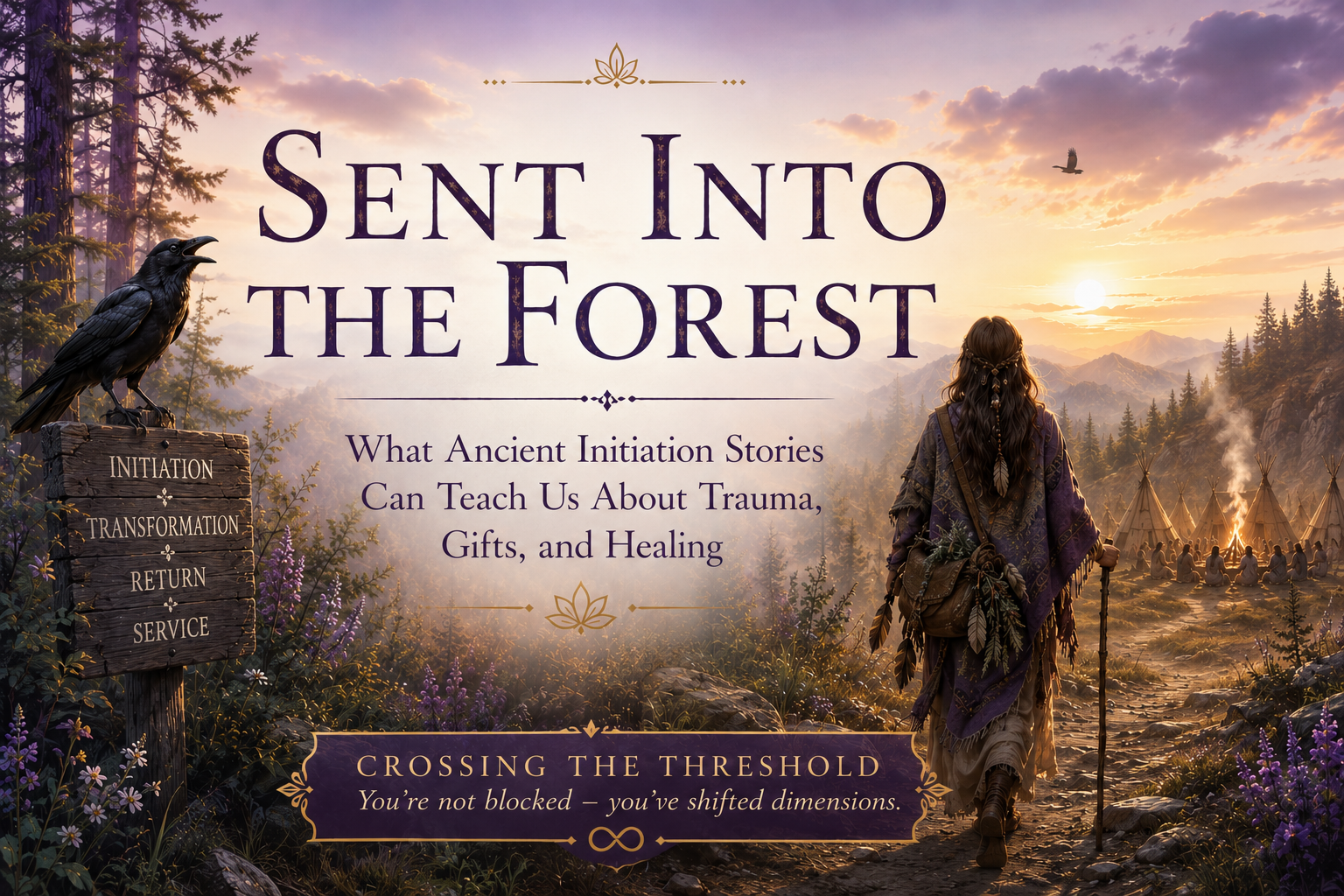
At some point, many tribal cultures held some form of initiation.
A crossing.
A sacred test.
The details may have varied from tribe to tribe, but the deeper purpose was often similar:
The person had to discover something about themselves that could not be learned inside the safety of the village.
So one day, the young healer would be sent into the forest alone.
Perhaps the task involved gathering difficult medicines hidden deep in dangerous areas.
Maybe there was also a spiritual component.
A vision quest.
A ceremony.
A period of fasting or solitude.
But while they were out there…
Real life still happened.
The person had to survive.
They needed food.
Water.
Warmth.
Shelter.
And nature itself became part of the initiation.
A bear might come for their supplies.
A storm might destroy their shelter.
Wild animals might circle during the night.
Everything they learned from their elders would suddenly become real.
Not theory.
Embodiment.
Returning to the Village
And eventually, if they survived, they would return to the village changed.
Usually, the children noticed first.
Children always notice first.
They would come running through the village shouting:
“Sarah has returned!”
The adults would emerge from their tents smiling with relief.
The healers would rush forward and gently escort her back to the healing tent.
There, they would clean her wounds.
Give her water.
Prepare warm food and healing teas.
Wrap blankets around her shoulders.
Let her sleep as long as she needed.
Sometimes people returned exhausted.
Sometimes injured.
Sometimes emotionally shaken by what they experienced in the forest.
And nobody shamed them for it.
Nobody said:
“You should be over it by now.”
Nobody denied what happened.
The entire community understood something modern people often forget:
Transformation changes people.
The Ceremony
And after the healing came the ceremony.
The whole village gathered together to honour the person who had returned.
There would be a celebration.
Music.
Food.
Stories.
Recognition.
The chief might stand and say something like:
“Tonight we honour Sarah upon her return from the forest. She has completed the sacred journey and brought back the medicines our people will need through winter. We always believed she could do this, but perhaps the journey was needed so she could believe it herself.”
And then Sarah would be invited to speak.
She might describe how frightened she was at first.
How she learned to listen to the forest.
How, somehow, she suddenly knew when fish were coming up the stream and placed her net at exactly the right moment.
How an owl warned her during the night to move her food because a bear was nearby.
How, during her vision quest, she saw something important about the future of the tribe.
And the village would listen.
Not with judgment.
With respect.
Because now her gifts were recognized.
Not hidden.
Not dismissed.
Not pathologized.
Honoured.
What We Lost
I think about these stories often when I look at modern life.
Because human beings still go through forests.
Only now they often look different.
Abusive homes.
Violence.
Neglect.
Addiction.
Loss.
Bullying.
Poverty.
Emotional survival.
Many spiritually sensitive people develop their gifts inside difficult environments because survival itself forces the nervous system to become highly aware.
But unlike tribal communities, modern society often does not recognize these experiences as initiations.
There is no ceremony.
No honouring.
No moment where the village says:
“You survived something difficult.
And you came back changed.”
Instead, many people are left alone carrying shame about what happened to them.
Their experiences are minimized.
Dismissed.
Denied.
Or blamed on them entirely.
And because there is no recognition that the forest experience has ended, many people unconsciously remain psychologically trapped there.
They continue recreating survival patterns over and over again.
A child raised in abuse may later choose abusive relationships.
Someone raised in chaos may unconsciously recreate chaos because the nervous system still believes it lives in the forest.
The Gifts Become Entangled With the Pain
And often the gifts themselves become tangled up with the trauma.
The person does not recognize their intuition, strength, sensitivity, awareness, resilience, or wisdom as gifts…
because remembering the gifts also reminds them of the pain surrounding how those gifts were formed.
This is why healing matters so deeply.
Sometimes the first step in healing is simply helping someone understand:
“You are out of the woods now.”
And if they are not fully out yet, then perhaps they need something equally important:
Recognition.
Witnessing.
Support.
Someone to say:
“What you are surviving requires courage.”
The Real Purpose of Healing
Eventually comes the deeper question:
“What did this experience teach your soul?”
That question changes everything.
Because suddenly the person stops seeing themselves only as damaged.
They begin retrieving the wisdom hidden inside the experience.
The strength.
The awareness.
The compassion.
The intuition.
The growth.
The soul parts trapped in survival begin returning.
And the shame slowly loosens its grip.
Maybe this is what healing ceremonies were always meant to do.
Not erase the forest.
But help people understand that they survived it…
and recognize the person who emerged on the other side.
If this speaks to you and you want to experience witnessing, honouring, soul gift retrievals, and stepping into your new gifts and energies…I would love to work with you. Here is some more information about how to work with me, and below is the booking link if you feel inspired: